Wednesday, May 22, 2013

Vers Une Architecture: From the Bildungsroman to the Manifesto

A pallid sky, above the world that ends from decrepitude, will perhaps depart with the clouds: the tatters of the worn-out purple of sunsets fade in a river sleeping to the horizon submerged in rays and water. The trees are bored and, under their whited leaves (from the dust of time rather than of roadways), rises the canvas house of the Showman of Things Past.

So begins Stephane Mallarmé's prose poem 'The Future Phenomenon', where crowds have gathered in this post-apocalyptic scene, confronted with some anonymous female figure of the past: 
When all have contemplated the noble creature, vestige of some epoch already accursed, some indifferent, for they have not had the strength to comprehend, but others broken and their eyelids moist with resigned tears will look at each other; while the poets of those times, feeling rekindled, their extinguished eyes, will head for their lamp, their brains drunk a moment with a confused glory, haunted by a rhythm and in forgetfulness of existing in an epoch that survives beauty.

This prose poem, according to the renowned Le Corbusier scholar Jean-Louis Cohen, was the inspiration for one of the more oblique references in the Swiss artist/ architect's iconic publication Vers Une Architecture – a title that would later be translated, to the detriment of the original, as Towards a New Architecture (An earlier title that Le Corbusier later rejected, was 'Architecture or Revolution').

In a lecture given at the Getty Research Institute in 2008 (entitled 'Vers Une Architecture: From the Bildungsroman to the Manifesto') Cohen explains how the motif of the aeroplane, that appears in the book with the mysterious caption 'Eyes that do not see...airplanes', was inspired by Mallarmé's prose poem, and seems to grasp at the sensation of an old world being confronted with the new.  

This would seem to be an inverse of Mallarmé's prose poem, where the sighting of 'things past' enduces a drunkenness of 'confused glory' in the poets of from a time that has seemingly outlived beauty. What Le Corbuiser is in fact celebrating here is the role of the engineer, as designer and artist. Perhaps the Mallarmé quote also reflects the writer's own feelings at the time, whilst studying the buildings of ancient Rome. Did he too feel like he was looking back at the past from a distant present; from a time that had outlived beauty?

Vers Une Architecture was an opportunity for Le Corbusier to legitimate his own position as aspiring architect by grounding his thoughts in historical narrative. To understand what architecture is, he believed, one must learn from the lessons of Rome (the young Le Corbusier's identification with Michelangelo was profound). All these details and much more are discussed by Jean-Louis Cohen in this lecture. Perhaps most interesting and impressive is Cohen's description of Vers une Architecture as a 'complex printed object', and his page-by-page explanation of Le Corbusier's visual and rhetorical strategies; his choice of images, his manipulation of them (using proto Photoshop techniques), and his sophisticated understanding of page layouts to commuicate ideas. Vers une Architecture is a fine example of what Paul Valery referred to in Le Physique du livre.

Another prolific commentator on Le Corbusier, Charles Correa (who I will return to in a later post) has reflected on the architect's legacy, particularly in India. 'Especially in his buildings in India', writes Correa, 'Corb has become more and more absorbed in his visual language; and however masterful this language may become, it is still only one aspect of any great architecture.' After referring to the Secretariat in Chandigarh as 'a magnificent façade, like a stage set,' Correa asks, 'Did not the earlier Corb promise something less skin-deep, something more conceptual?'
  
Cohen's presentation at the Getty Institute (itself a summary of his introduction to the new 2007 translation published by Getty, with the 'New' erased from the title) reveals how 'Corb' was in fact absorbed in the formulation of his own visual language even in these early formative years of his career. Vers une Architecture is, Cohen explains, even something of a rumination on his insecurities and failures as an architect and businessman up until this point. The publication of this collection of essays would change Le Corbusier's circumstances dramatically; in effect it would prove to be a unique marketing tool for him.

Cohen concludes with some comments on the book's legacy and the problems of translation. He refers to Edwin Lutyen's response to Towards a New Architecture (another European architect prolific in India's cities, having been responsible for the development of New Delhi). In what was published as 'The Robotism of Architecture', Lutyens remarks that the buildings seemingly promised by Le Corbusier here can only be made for robots: 'robots without eyes – for eyes that have no vision cannot be educated to see.' Cohen chalks this scathing review up to the English translation, which was a 'complete betrayal of Le Corbusier's intentions.' But Lutyen's remarks seem to be also punning on Le Corbusier's description in the book (after Mallarmé) of 'eyes that do not see ... airplanes'. 

There appear to be two arguments: on the one hand (with Lutyens) the new architecture has lumbered us with eyes that have no vision, whereas on the other (Le Corbusier) our eyes are simply 'not yet able to discern' the style of an era as such that is so fixed in the present moment.

Monday, April 15, 2013

New Old Town

During World War II, German forces razed more than 80% of Warsaw.  After Soviet troops took over, much of the city was rebuilt. The Soviets built apartment blocks; this was communist ideology in architectural form. Roman Mars' 99% Invisible, a unique podcast dedicated to design, recently presented this feature on the New Old Town in Warsaw.  In it Amy Drozdowska and Dave McGuire, speak with Warsaw-born anthropologist Michał Murawski about Warsaw’s complicated post-war history. They explain how the New Old Town in Warsaw is a replica; a carefully constructed re-imagining of what the city was. It is believed that Stalin thought a new, communist Poland would be more easily achieved if the former capital city was completely obliterated. What's more the idea of the Old Town was to be more valuable to the new Soviet powers than the former town itself.

The New Old Town is in effect a facade, a stage-set intended to create a certain ideological atmosphere. This was built by Stalin's forces to mask the reality that Poland was being taken over by foreign powers, and to ward off public nostalgia for a pre-Communist Poland, by manipulating the public into believing that they have not lost their past, their traditions, their former identities (not just through architecture but "history paintings"—the major inspiration for the rebuilding of the city were the paintings of an 18th Century Italian artist named Bernardo Bellotto). In doing this the new powers gave the impression that they had respect for the "old" ways of life.

Nostalgia has been considered a melancholy disease that produces erroneous representations of something that is lost (see Svetlana Boym's The Future of Nostalgia). In this case, the old town needed to be rebuilt, in order to be forgotten. If not, the public might long for what they were missing (or at least what they thought they were missing) and therefore make enemies of the new communist powers that brought in the new buildings and ideologies.


Friday, January 25, 2013

Le Corbusier's Peace Hand Drawings, Chandigarh

The Peace Hand in Chandigarh was based on drawings and observations that Le Corbusier made of his own hand. This drawing hangs in the architect's old office building in the city. The building is now a museum for his contribution to the conception of Chandigarh. After many years of being out of bounds to the public, the Peace Hand is now accessible to all who visit, passing the sandbags and armed guards on their way.

 Upon our visit the 'contemplation pit' was starkly empty, and the hand, as ever, towered over it, swaying in the breeze. We stayed for a while, talked, sat and experimented with the acoustics in the pit that had been designed for public discussion and debate. Throughout this the hand still felt a rather imposing presence. What was this hand presiding over?

Tuesday, September 4, 2012

Space for Engagement: The Indian Artplace and a Habitational Approach to Architecture by Himanshu Burte

'Adorno said that architecture worthy of human beings thinks better of them than they actually are. For far too long, in modern India, our place-makers have tended to think worse of us than we are.'


'Values that have emerged in one place and situation. . . may be translated in toto to another very different situation—say Chandigarh—in ways at odds with local cultures of habitation.'


On the Capitol Complex, Chandigarh:
'Scale and emptiness can sometimes suppress the bonds that join us, and having weakened that solidarity, render each more vulnerable to those seen to be in control of that space. . .  exaggerated scale constantly invokes an exalted conception of 'freedom' even as it denies any foothold for habitation. Ironically then, instead of exhilaration in this monument to spaciousness, the dweller realizes the impotence of his/ her own humanity faced with the majesty of the space itself. . . The architect glories. poetically, in the tragic irrelevance of the individual to the larger order of the universe.'

On Habitational Poetics (After Gaston Bachelard):
'To dwell successfully in a place is often to be able to forget it and inhabit instead the feelings, possibilities and actions that the space enables . . . Habitational poetics [is the] possibility of being distracted away from the autonomous qualities of architecture. . . It is impossible to be part of the everyday life of a space as well as concentrate exclusively on its intrinsic qualities. . . Through the gaps of perception, memory and habit falls the unique qualities of our habitats.'

— Himanshu Burte is an architect and writer, based in Goa, presently engaged in promoting a critique of present-day architecture in India by means of constructing a domain of public opinion concerned with public space in the country's cities. Offering a critique of contemporary architectural and institutional approaches to 'place-making', Space for Engagement (Seagull Books, 2008) proposes an alternative approach to thinking about architecture, centred on our experience of inhabiting spaces, inspired by Gaston Bachelard's Poetics of Space.


Thursday, July 26, 2012

The Secret City


In 1958 a government official employed by the Public Works Department as a roads inspector, began construction on what is now known as the Rock Garden of Chandigarh. Over the course of fourteen years Nek Chand Saini (b. 1924) gathered stones, scrap metal, bicycle parts, tires, tissue, glass, ceramic and wire, to realise a small kingdom populated by pottery elephants, horses, monkeys, gods, goddesses and thousands of human figures. Located in a publically owned forest reserve and structured around a series of bridges, gorges, passageways, courtyards, streams and waterfalls, the vast garden remained undiscovered until 1972. 
 Figures in Nek Chand's Rock Garden. Image: Carol Mitchell
The Rock Garden was constructed in the shadow of and in tandem with Le Corbusier’s modernist new town: Chand collected recyclables and discarded material from villages demolished to make way for the city, he chose a site designated a land conservatory for the new capital and even convinced government employed workers to labour on his parallel building site. Designated a ‘garden’, it is arguably also a differently imagined city. Constructed from the detritus of former habitations, labyrinthine in form and crammed with brightly coloured constructions, Chand’s hidden world exists in stark and seemingly diametric opposition to the aesthetic ideals explicit in the architecture of Chandigarh.
More illuminating perhaps is to consider the possible contact points between these two architectural projects: one carried out the public eye and marking an attempt to realise a particular vision of India’s future, the other undertaken in secret but similarly guided by a desire to in some way reflect the identity of a newly-partitioned nation. 
Elsa Richardson
Further reading: 

Monday, July 16, 2012

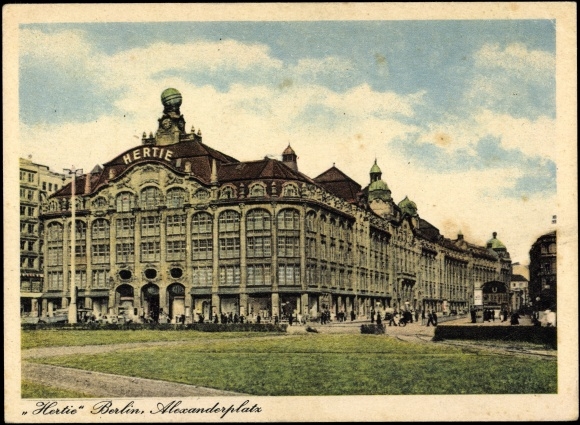
The Front of a Department Store

Warenhaus Tietz 1905

Warenhaus Tietz 1933

Kaufhaus Hertie 1934

Kaufhaus Hertie 1941

Kaufhaus Hertie 1945

HO Centrum-Warenhaus 1970

HO Centrum-Warenhaus 1989

Galeria Kaufhof 1990
Galeria Kaufhof 2005
Galeria Kaufhof 2007


Dreams of Presidents: 1. The Atlantic Dubai


Take the R30 road west from Kébémer, Senegal, and some 25 miles of scrub and desert later you reach the atlantic coast and the tiny village of Lampoul. In 2007 the President, Abdoulaye Wade, born in the area when it was still part of colonial French Sudan, announced his vision of a new capital to be placed in this wild spot - a "Dubai on the Atlantic".

By 2010 the Government was to be transferred to the new city - by 2015 the population would be 2 million. Minister Ahmed Niasse spoke proudly that "We think this new Dubai can be more attractive than the Dubai in the Gulf," basing his hopes on a Paul Romer style tax free model.

The idea had some rationale to it. The existing capital, Dakar, has its growth strangled due to its position on a peninsular, and there are other recent West African precedents. The city had a price tag of $30 billion and memorandums of understanding were signed with Dubai World, the state owned Emirati company that grew a city from nothing once before. Wade was notorious for spending huge sums on "prestige projects". Work began making a hill for Wade's conception of an "African Renaissance Monument" in 2006. To be built by a North Korean construction company, when completed it would be the tallest statue in Africa.

After that the internet goes silent, as remain the dunes of Lampoul. There's no word of what scuppered the deal. In 2008, of course, the global economic crisis struck - a year later Dubai World asked creditors for a six-month ‘standstill’ on its debt repayments, which has since extended to 9 years. Add to that the fact that Sudan never had the oil capital that the Emirati's expansion was based upon and it hardly seems surprising the plan came to nothing.

Wade lost power in March 2012. He was praised by Hilary Clinton for accepting the result magnanimously. The new President's birthplace is to the south of Dakar, far from the small fishing village that was to become a global city. However, at least Wade got his statue.